Current location:Home > Pharmaceutical
Product
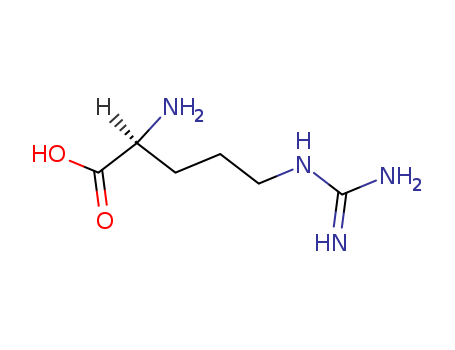
Top Quality Chinese Manufacturer supply 74-79-3 L(+)-Arginine
- Molecular Formula: C6H14N4O2
- Molecular Weight: 174.203
- Appearance/Colour: white crystalline powder
- Vapor Pressure: 7.7E-08mmHg at 25°C
- Melting Point: 222 °C (dec.)(lit.)
- Refractive Index: 27 ° (C=8, 6mol/L HCl)
- Boiling Point: 409.14 °C at 760 mmHg
- PKA: 1.82, 8.99, 12.5(at 25℃)
- Flash Point: 201.241 °C
- PSA: 125.22000
- Density: 1.467 g/cm3
- LogP: 0.55280
L(+)-Arginine(Cas 74-79-3) Usage
|
Indications and Usage |
Odorless, slightly bitter. Easily soluble in water (solubility in 0℃ water is 83g/L, solubility in 50℃ water is 400g/L), very slightly soluble in ethanol, insoluble in ether; pI6.0; loses its 2-molecule water crystal when heated to 105℃, darkens in color at 230℃, disintegrates at 244℃; its aqueous solution has maximum absorption at 205nm (1gε3.28). L-Arginine is an encoding amino acid in protein synthesis and is one of the 8 essential amino acids in the human body. The body needs it for many different functions. Taking L-Arginine supplements can treat certain diseases such as congestive heart failure and cystitis. L-Arginine can also act as seasoning for nutrient supplements and food additives. L-Arginine can undergo a heat reaction with sugar (amino-carbonyl reaction) to obtain a unique fragrance, GB 2760-2001, an approved food spice. As an amino acid drug, L-Arginine can be used as pharmaceutical raw material and is an important ingredient in amino acid infusions and integrated amino acid preparations. It is also a crucial amino acid in maintaining infant growth and maturation. |
|
Mechanisms of Action |
L-Arginine can stimulate the human body to release certain chemicals such as insulin and human growth hormone. It can also clear ammonia in the body and promote the healing of wounds. The human body also needs it to produce sarcosine. Decomposing L-Arginine produces nitric oxide, which can expand blood vessels and increase blood flow. L-Arginine is an intermediate metabolite in the orthinine cycle and promotes the conversion of ammonia to urea, thus lowering the blood concentration of ammonia. L-Arginine is also an important part of sperm protein and can promote spermatogenesis and provide energy for sperm movement. Additionally, intravenous arginine can stimulate the pituitary to release growth hormone and can be used to test pituitary functions. |
|
Adverse reactions |
Abdominal pain, diarrhea, gout and bloating. There may also be increased severity in herpes breakouts and increased effects of antihypertensive drugs, resulting in a lower blood pressure than expected, which may cause hypertensive patients to experience dizziness and fainting. |
|
Toxicity Level |
Moderate |
|
Acute Toxicity |
Reference data: abdominal cavity – large rat LD50: 3793 mg/kg. |
|
Flammability Characteristics |
Flammable. Burning produces toxic nitrogen oxide smoke. |
|
Handling |
Store in ventilated, cool and dry area. |
|
Extinguishers |
Dry powder, foam, sand, carbon dioxide, water mist. |
|
Biochem/physiol Actions |
Substrate of nitric oxide synthase, which is converted to citrulline and nitric oxide (NO). Induces insulin release by a nitric oxide-dependent mechanism. |
|
Safety Profile |
Mutation data reported. Whenheated to decomposition it emits toxic fumes of NOx. |
|
Synthesis |
Enzymatically, arginine is formed in two reactions from citrulline. The first reaction (citrulline + succinate) is catalyzed by the enzyme arginosuccinate synthetase. It is ATP dependent and with the formation of a new C–N bond in the gaunidino group of arginosuccinate, water is removed and ATP is hydrolyzed. The second reaction is catalyzed by arginine synthetase and involves the scission of arginosuccinate with the formation of arginine and fumaric acid. |
|
Purification Methods |
S-Arginine crystallises from H2O as the dihydrate and as plates from EtOH. It also crystallises from 66% EtOH. Its solubility in H2O is 15% at 21o. Its isoelectric point is at pH 10.76. [Greenstein & Winitz The Chemistry of the Amino Acids J. Wiley, Vol 3 p 1841 1961, Beilstein 4 IV 817.] |
|
|
|
|
Biological Functions |
Arginine is an amino acid involved in various biological functions, including cell proliferation, cell signaling, muscle contraction, immunity, neurotransmission, vasodilation, synthesis of growth factors, and other amino acids. |
|
Sources of Arginine |
Three major sources of arginine include dietary intake (found in foods such as chicken, pork loin, pumpkin seeds, peanuts, soybeans, etc.), endogenous synthesis from citrulline, and protein catabolism. |
|
Metabolism |
Arginine serves as a direct resource for nitric oxide (NO), ornithine, and agmatine through enzyme reactions involving nitric oxide synthase (NOS), arginase, and arginine decarboxylase (ADC). |
|
Role as a Nutraceutical |
L-arginine, the L-isomer of arginine, functions as a nutraceutical and is involved in various metabolic processes in mammals, including humans. |
|
Synthesis of Nitric Oxide (NO) |
Arginine is an essential substrate for the synthesis of nitric oxide (NO), a major vasodilator that increases blood flow to tissues, regulates nutrient metabolism, and exhibits antimicrobial properties. |
|
Physiological Roles |
Arginine activates cellular signaling pathways, including mechanistic target of rapamycin (MTOR) and focal adhesion kinase, stimulating protein synthesis, inhibiting autophagy and proteolysis, enhancing wound healing, promoting spermatogenesis and fertility, and augmenting milk protein production. |
|
Health Benefits |
Oral supplementation of arginine within the physiological range can confer various health benefits, including enhanced immunity, anti-infectious, and anti-oxidative responses, improved fertility, wound healing, ammonia detoxification, nutrient digestion and absorption, lean tissue mass, and brown adipose tissue development. |
|
Medical Uses |
Arginine supplementation has been used to treat conditions such as erectile dysfunction, sickle cell disease, muscular dystrophy, and pre-eclampsia. It also shows potential in ameliorating metabolic syndromes such as dyslipidemia, obesity, diabetes, and hypertension. |
|
General Description |
L(+)-Arginine is a versatile amino acid with significant roles in peptide synthesis, catalysis, and biomedical applications. It serves as a key component in efficient peptide extension at N- and C-termini, retaining chirality with high yields (66–95%). As a cost-effective and recyclable catalyst, it facilitates the synthesis of α,β-unsaturated nitriles and ketones in ionic liquids, yielding 45–100% efficiency. In biomedicine, arginine-based poly(ester amide) enhances hydrogel biocompatibility, improving cell attachment and proliferation. Additionally, arginine derivatives exhibit antiviral activity against HIV-1 by targeting TAR RNA and show promise as antimicrobial peptides. Its involvement in nitric oxide regulation further highlights its therapeutic potential for inflammatory and neurodegenerative diseases. |
|
Definition |
ChEBI: An L-alpha-amino acid that is the L-isomer of arginine. |
|
Aroma threshold values |
Detection at 100%, faint. |
|
Taste threshold values |
Taste characteristics at 1000 ppm: hint of sourness. |
InChI:InChI=1/C6H14N4O2/c7-4(5(11)12)2-1-3-10-6(8)9/h4H,1-3,7H2,(H,11,12)(H4,8,9,10)/p+1/t4-/m0/s1
74-79-3 Relevant articles
Binding Methylarginines and Methyllysines as Free Amino Acids: A Comparative Study of Multiple Host Classes**
Bayer, Peter,Hof, Fraser,Isaacs, Lyle,Kamba, Bianca E.,Le, My-Hue,Schrader, Thomas,Warmerdam, Zoey
, (2021/11/30)
Methylated free amino acids are an impor...
Direct monitoring of biocatalytic deacetylation of amino acid substrates by1H NMR reveals fine details of substrate specificity
De Cesare, Silvia,McKenna, Catherine A.,Mulholland, Nicholas,Murray, Lorna,Bella, Juraj,Campopiano, Dominic J.
supporting information, p. 4904 - 4909 (2021/06/16)
Amino acids are key synthetic building b...
Argicyclamides A-C Unveil Enzymatic Basis for Guanidine Bis-prenylation
Balloo, Nandani,Fujita, Kei,Matsuda, Kenichi,Okino, Tatsufumi,Phan, Chin-Soon,Wakimoto, Toshiyuki
supporting information, p. 10083 - 10087 (2021/07/26)
Guanidine prenylation is an outstanding ...
Sequence-Selective Protection of Peptides from Proteolysis
Li, Xiaowei,Chen, Kaiqian,Zhao, Yan
supporting information, p. 11092 - 11097 (2021/04/05)
Proteolysis of proteins and peptides is ...
74-79-3 Process route
-
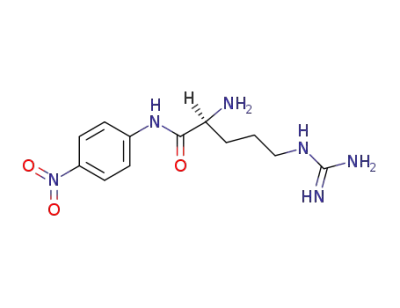
-
6154-84-3
H-Arg-pNA

-
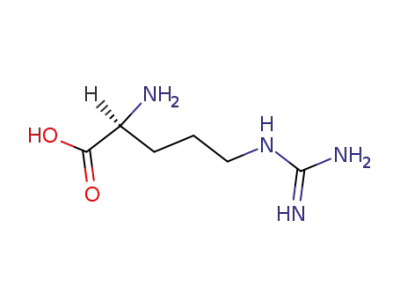
-
74-79-3,25212-18-4
L-arginine

-
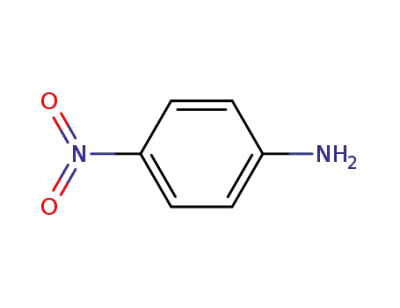
-
100-01-6,104810-17-5
4-nitro-aniline
| Conditions | Yield |
|---|---|
|
With
Tris-HCl buffer; an aminopeptidase from the seeds of Cannabis sativa; water;
at 37 ℃;
pH=7.5;
Enzyme kinetics;
Enzymatic reaction;
|
-
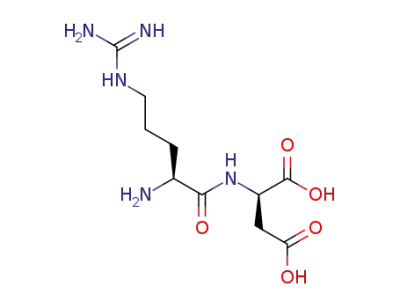
-
275354-61-5
L-Arg-D-Asp
-
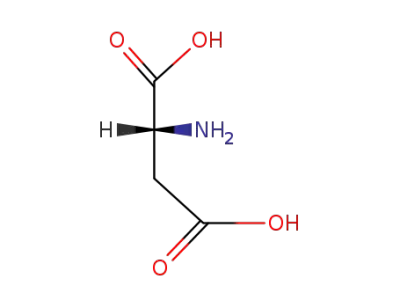
-
1783-96-6,25608-40-6,27881-03-4,32505-46-7,52526-39-3
(2R)-aspartic acid
-
-
74-79-3,25212-18-4
L-arginine
| Conditions | Yield |
|---|---|
|
With
recombinant Streptomyces coelicolor Sco3058 dipeptidase; water;
at 30 ℃;
pH=8;
Concentration;
Kinetics;
aq. buffer;
Enzymatic reaction;
|
74-79-3 Upstream products
-
70-26-8
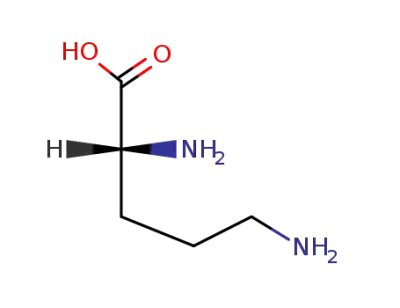
D-ornithine
-
420-04-2
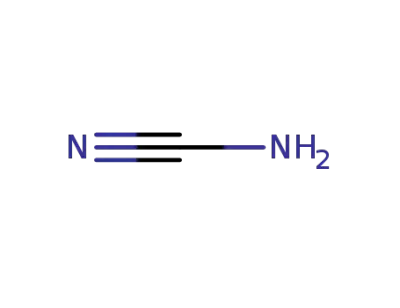
CYANAMID
-
7200-25-1
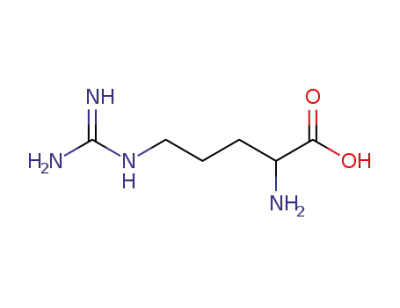
Arg
-
372-75-8
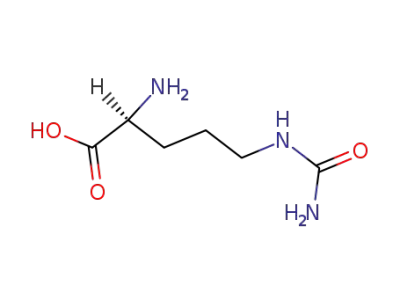
Citrulline
74-79-3 Downstream products
-
2577-94-8
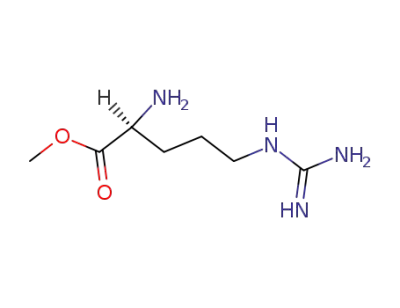
L-arginine methyl ester
-
35436-73-8
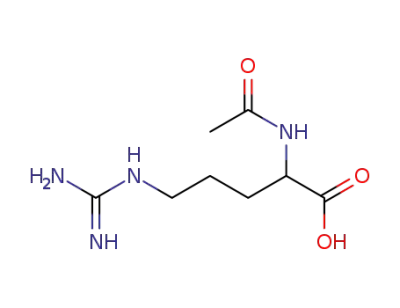
Nα-acetylarginine
-
34522-32-2
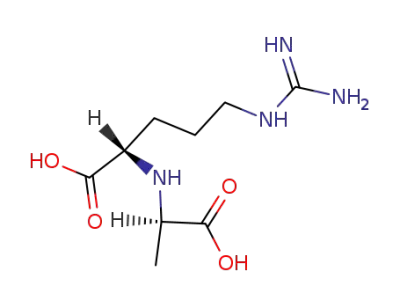
N2 -(D-1-carboxyethyl)-L-arginine
-
63358-47-4
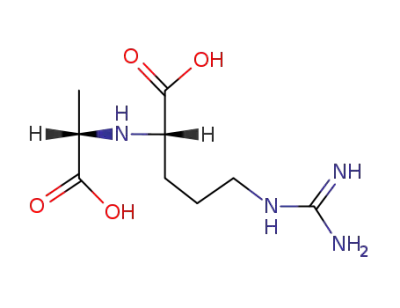
(S),(S)-octopine